Wasp Nest Identification
Identify the Wasp Nest on Your Property
Not all wasp nests look alike.
Some wasps build large, enclosed paper nests high in trees. Others construct open-comb nests beneath roof overhangs. Some species build their nests underground, while others establish colonies inside walls, attics, chimneys, hollow trees, or other enclosed cavities.
Identifying the type of nest you have found can provide important clues about the wasp species involved and the location of the colony.
If you have discovered a wasp nest on your property, compare its appearance and location with the descriptions below. If you are still unsure what type of nest you have found, contact Hornet King for professional assistance with wasp nest identification and removal.
1. Bald-Faced Hornet Nests
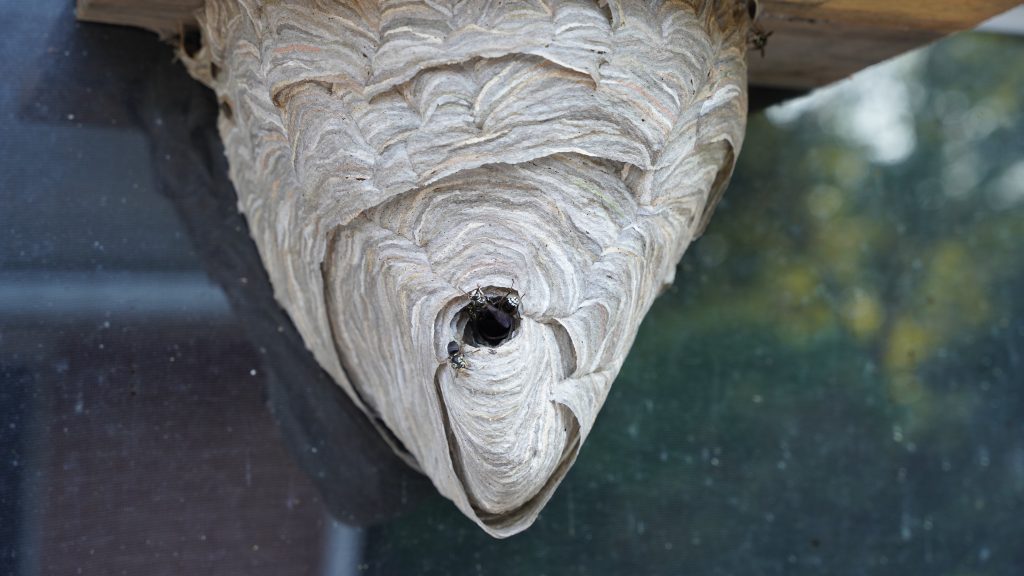
Bald-faced hornets construct large, enclosed aerial nests that are usually suspended above the ground.
The exterior of the nest is typically made from layered gray, tan, or brown paper material. This outer envelope surrounds and protects the internal comb, which is the central structure where the colony raises its young.
A mature bald-faced hornet nest often has a distinctive oval or football-like appearance with a single entrance near the bottom.
Common nesting locations include:
- Trees
- Shrubs
- Bushes
- Roof overhangs
- Eaves
- Buildings
- Other elevated locations
If you have found a large, enclosed, gray paper nest hanging from a tree or structure, it may be a bald-faced hornet nest.
Learn more about [Bald-Faced Hornet Removal].
2. Subterranean Yellow Jacket Nests
Some yellowjackets construct their nests underground.
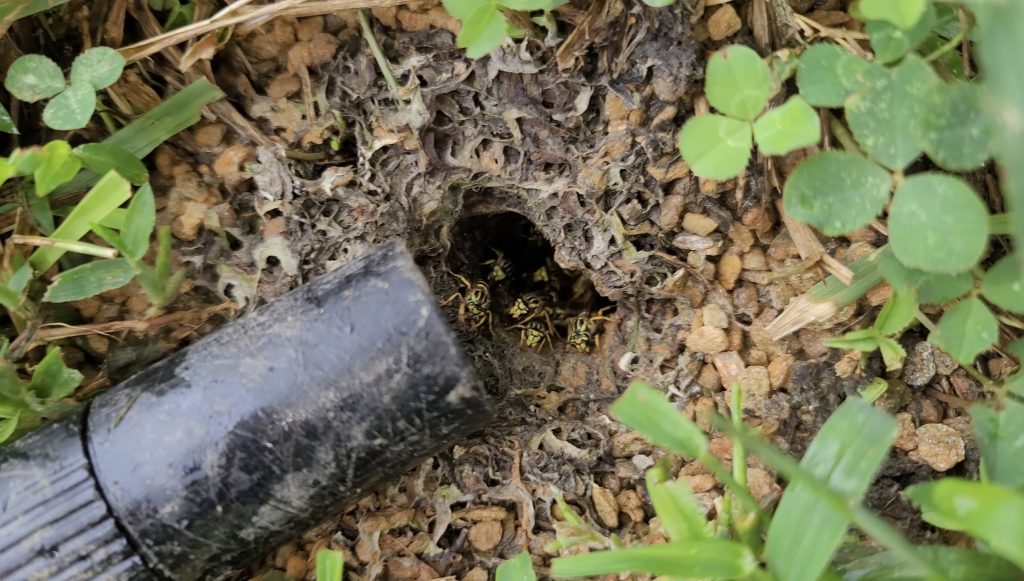
The colony may be located beneath the soil surface in an abandoned rodent burrow, natural cavity, or another underground space. The visible entrance may be nothing more than a small hole in the ground.
The nest itself is hidden below the surface, making the colony difficult to see.
One of the most common signs of a subterranean yellow jacket nest is repeated yellow jacket activity entering and exiting the same opening.
You may notice yellow jackets:
- Flying into a hole in the ground
- Emerging from the same entrance
- Entering areas beneath landscaping
- Nesting in lawns or gardens
- Using abandoned animal burrows
A small hole can lead to a much larger underground colony.
3. Yellow Jacket Nests Inside Structures
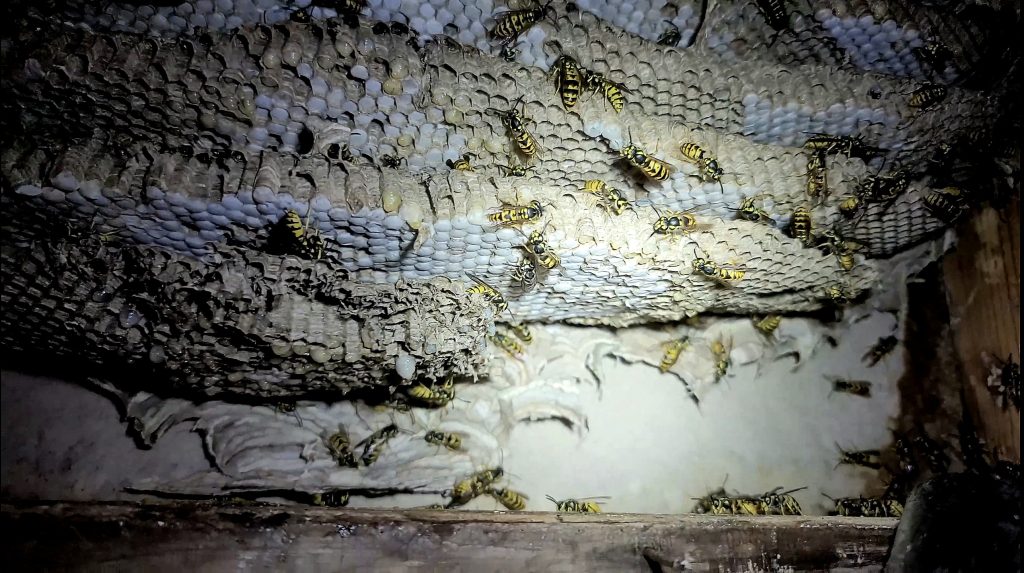
Yellowjackets may also construct nests inside enclosed areas of homes and other buildings.
Depending on the species and location, a colony may be found inside a wall void, attic, ceiling, soffit, roofline, or another concealed structural cavity.
In these situations, the nest itself may be completely hidden.
Instead of seeing the nest, you may notice yellow jackets:
- Entering a crack or opening in the exterior
- Emerging from a wall
- Appearing inside the home
- Flying around an attic
- Entering a soffit or roofline
- Appearing around windows or light fixtures
The location where yellow jackets are seen may not be the location of the nest. Wasps may travel through enclosed spaces before emerging through an opening elsewhere in the structure.
Learn more about [Yellow Jacket Nest Removal Inside Your Home].
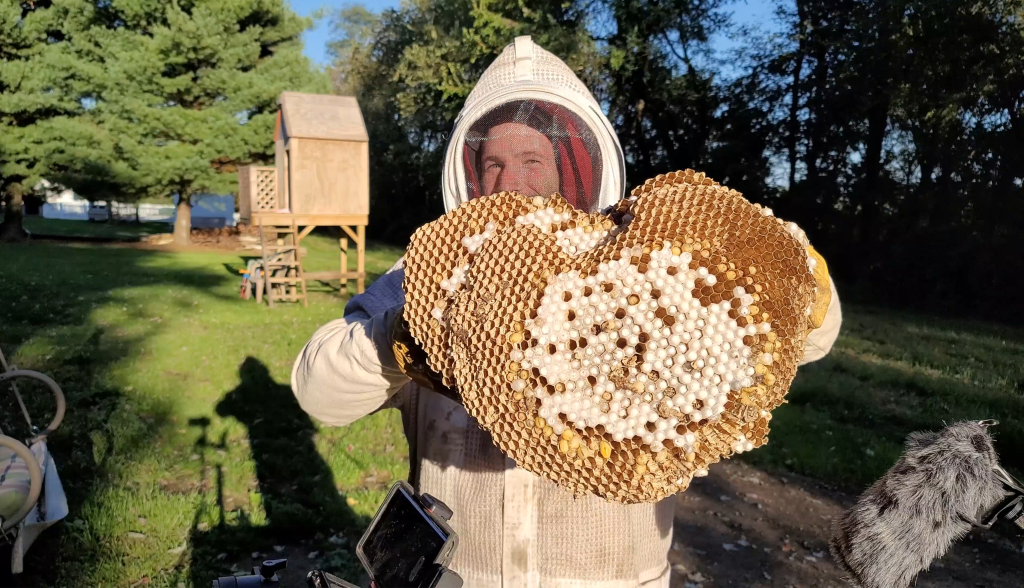
4. European Hornet Nests
European hornets are cavity-nesting wasps.
In nature, they commonly establish nests inside enclosed spaces such as hollow tree trunks and other natural cavities.
The same nesting behavior can lead European hornets into structures around homes and businesses.
European hornet colonies may be found inside:
- Hollow trees
- Wall voids
- Attics
- Chimneys
- Soffits
- Roofline cavities
- Sheds
- Barns
- Other enclosed spaces
The nest may be completely hidden from view, with the primary sign of the colony being European hornets repeatedly entering and exiting a small opening.
If you see large hornets entering a cavity in a tree or structure, the colony may be located inside the enclosed space.
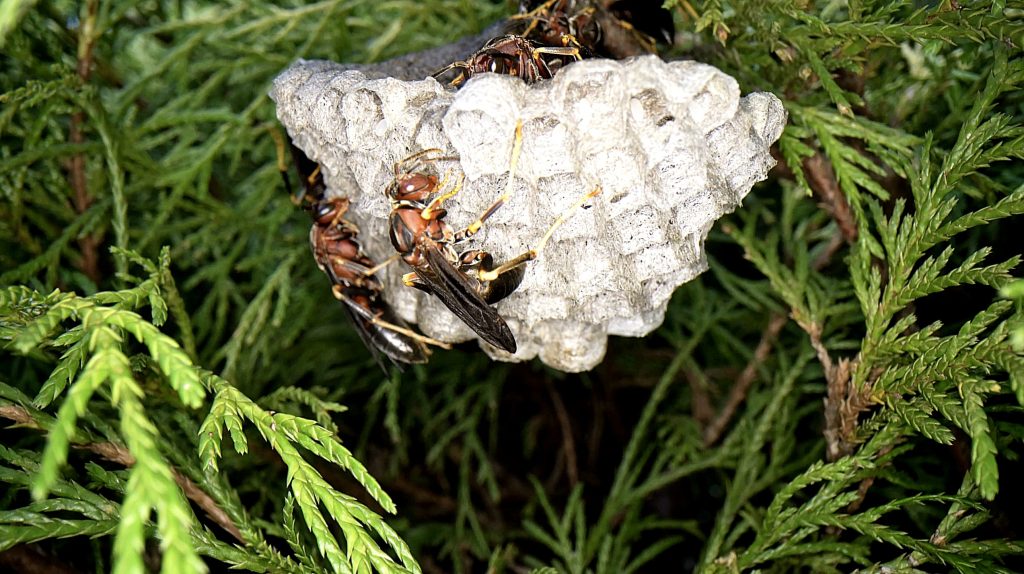
5. Paper Wasp Nests
Paper wasps construct one of the most distinctive nests found around homes.
Unlike yellowjackets and bald-faced hornets, paper wasp nests are typically open rather than enclosed.
The nest consists of exposed hexagonal cells attached to a surface by a narrow stalk. The open comb may contain eggs, larvae, and developing wasps.
Paper wasp nests are commonly found:
- Beneath roof overhangs
- Under eaves
- Beneath porch ceilings
- Under decks
- Around windows and doors
- Inside sheds
- On barns and outbuildings
- In other protected locations
If you see an exposed open-comb nest attached beneath a protected surface, it may be a paper wasp nest.
Learn more about [Paper Wasp Removal].
Not Sure What Type of Wasp Nest You Found?
Wasp nest identification can be difficult, especially when the nest is hidden inside a structure or located in an area that cannot be safely examined closely.
If you are a potential customer, and it is possible, take a photograph from a safe distance and TEXT HERE to Hornet King – He can ID the species and let you know what your service options are.
Do not approach, shake, hit, spray, dig into, or otherwise disturb an active nest.
Hornet King can help identify and remove all types of wasp, hornet, and yellow jacket nests, including:
- Bald-faced hornet nests
- Yellow jacket ground nests
- Yellow jacket nests inside homes
- European hornet nests
- Paper wasp nests
- Cicada killer burrows
- Other stinging insect infestations
If you have identified a wasp nest on your property and need professional assistance, contact Hornet King to schedule removal service.
Contact Hornet King
Call or text 717-615-4051 to discuss a wasp nest or stinging insect problem.
Professional Wasp, Hornet & Yellow Jacket Nest Removal
Hornet King serves Lancaster, Chester, York, Berks, Lebanon, Dauphin, Cumberland, Perry, and Adams Counties, as well as surrounding areas of Maryland and Delaware.